Issue 5 is now available: get yours here.

Issue 6 Open Call

Thank you to everyone who submitted their photos. Stay tuned for future announcements. 

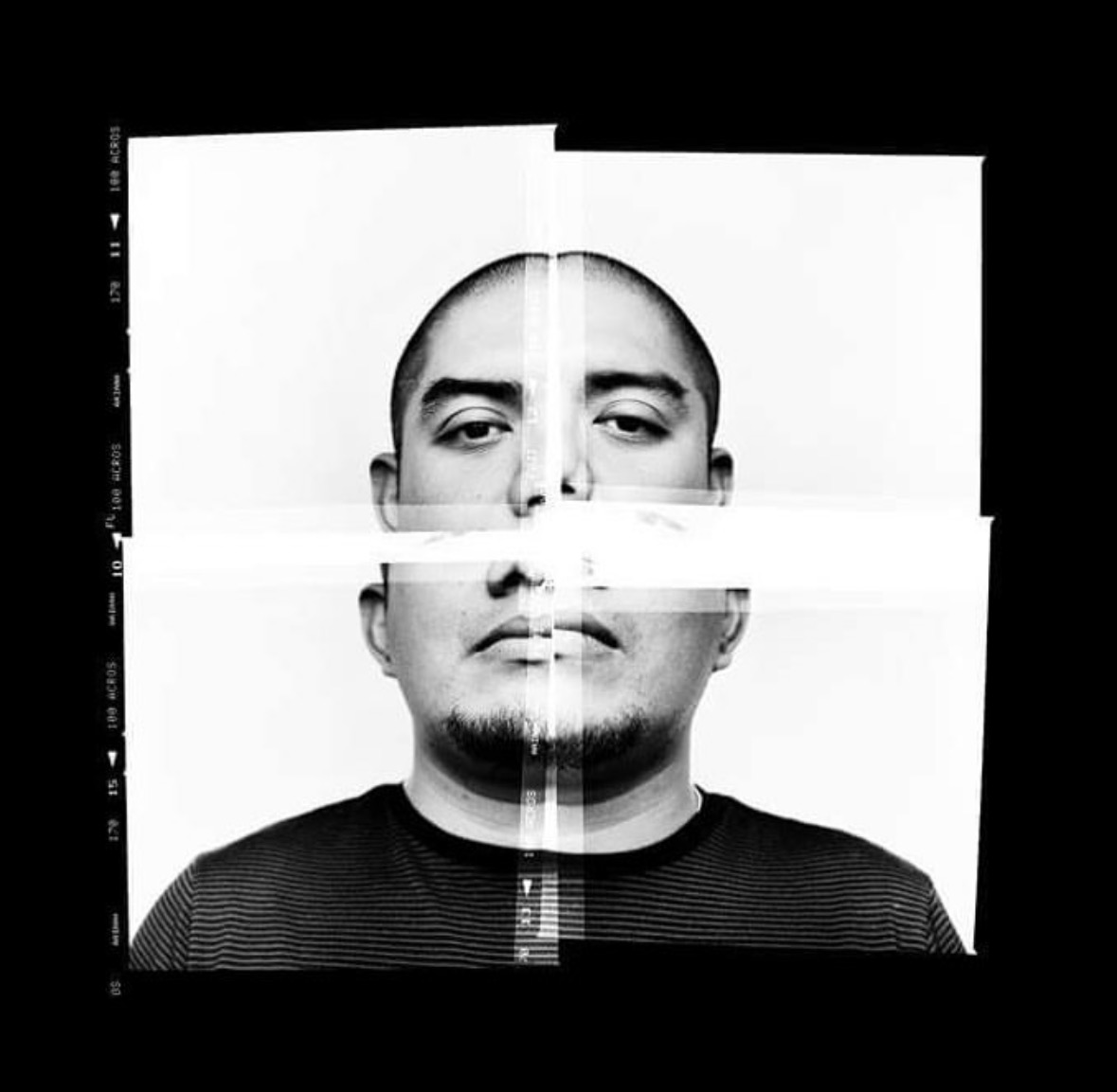
Image credit: Veejay Villafranca

Theme & Submission

Salve

Salve is both a greeting and a balm.

Derived from the Latin word meaning “be well,” it is both a welcome and an act of care. To say salve is to extend a hand across distance, to acknowledge another presence, and to imagine a relationship beyond division.

Seventy years ago, in April 1955, leaders from twenty-nine nations across Asia and Africa gathered in Bandung, Indonesia. Meeting as equals, they rejected colonial hierarchies, resisted the Cold War’s binary divisions, and proposed a different way of seeing one another and the world. Their gathering was not merely political; it was an act of recognition, solidarity, and mutual regard. Photography was there too. The images of Bandung became part of a visual history of solidarity among newly independent nations, shaping how much of the world came to see itself beyond colonial frameworks.

Today, the questions raised in Bandung remain urgent. How do we see one another across borders, histories, and differences? How do we care for communities, cultures, landscapes, and memories? What forms of solidarity are possible in a fractured world? How might images help us reconnect, repair, and reimagine our relationships with one another?

We welcome photographic and lens-based work that explores care, solidarity, self-determination, cultural continuity, ecology, memory, migration, resistance, and belonging. We are particularly interested in projects rooted in local experiences and perspectives, and in work that challenges inherited ways of seeing.

We also encourage submissions that engage with archives, found photographs, vernacular imagery, recontextualization, collective memory, and collaborative forms of image-making. Projects developed through dialogue, shared authorship, community participation, or cross-cultural exchange are especially welcome.

In the spirit of salve, we invite works that reach across distances, recover overlooked histories, and imagine new ways of being together.

Tiga Mata Team,
with Guest Editor Veejay Villafranca

Selected Works

We are pleased to announce the contributors selected for Issue 5: Truth Flux. We extend our congratulations to all selected contributors and our sincere thanks to everyone who submitted their photographs.

Your participation and support continue to make this publication possible, and we are grateful to every artist who shared their work with us.

All selected participants will be contacted via email. Please make sure to check your inbox.


Guest Editor: Veejay Villafranca

Veejay Villafranca is a Filipino documentary photographer and multimedia producer whose work examines environmental change, displacement, public health, and spirituality across the Philippines and Southeast Asia. Beginning his career as a staff photographer for Philippines Graphic before becoming an independent documentary photographer in 2006, he has spent nearly two decades documenting communities navigating the effects of climate change, conflict, and social transformation.

His work has been recognised internationally through the Ian Parry Scholarship (2008), the World Press Photo Joop Swart Masterclass (2013), and the Invisible Photographer Asia First Photobook Award (2018) for his photobook SIGNOS. In 2024, he served as Southeast Asia Jury Chair for the World Press Photo competition, exhibited at the Philippine Pavilion of the Gwangju Biennale, the Jeju Biennale, and New Beginnings: Philippine Photographic Art at the Fotografie Forum Frankfurt, while co-directing The Transition, a feature-length documentary on the Bangsamoro people’s pursuit of peaceful democratic governance.

A longtime Pulitzer Center grantee, Villafranca has reported on issues ranging from the Philippine HIV epidemic to deforestation and mining. He is also the host of Lens Speak Asia, a podcast featuring photographers and visual storytellers from across the region. An alumnus of the Angkor Photo Festival Documentary Photographer Workshop and the Asian Center for Journalism, he continues to lecture on documentary photography and visual storytelling while collaborating with international publications and development organisations, contributing to conversations around photography across Southeast Asia.

Grounded in listening, empathy, and long-term engagement with communities, Villafranca’s practice resonates deeply with the spirit of Salve. His approach to documentary practice invites contributors and readers alike to reconsider how photography can acknowledge one another across distances, recover overlooked histories, and imagine new ways of being together.

Submission Information

Eligibility

  1. Both amateur and professional photographers, including photo-related artists, who are nationals of Southeast Asian countries — Brunei, Cambodia, Indonesia, Laos, Malaysia, Myanmar, the Philippines, Singapore, Thailand, Timor-Leste, and Vietnam — are invited to submit to this Open Call.
  2. Submitted works must be authored by the submitting artist or photographer, or clearly identify collaborative authorship where applicable. All submissions should be grounded in the applicant’s own photographic, artistic, or research process. Plagiarism, misrepresentation of authorship, or uncredited use of images will not be considered.
  3. If the submitting artist or photographer is under the age of 16, written consent from a parent or legal guardian must accompany the submission.

How to Submit

  1. All entries must be submitted digitally via the Tiga Mata #6 Submission Form.
  2. If you experience technical issues with the submission form, please contact tigamata@zontiga.com.
  3. The email address provided will be used as the primary means of communication.
  4. Submissions may only be made on behalf of yourself or your collaborative team.

Submission
Deadline

Submissions open:
06 July 2026 (Monday)

Submissions must be received by:
26 July 2026 (Sunday), 23:59 (Malaysia Time / GMT +8)

Fees

There is no submission fee for entries.

Editorial Considerations

Personal & Local Perspectives
We encourage submissions rooted in lived experience and local contexts. Whether exploring family histories, communities, cultural traditions, migration, ecology, or everyday life, we value work that offers thoughtful and authentic perspectives.

Archives, Memory & Existing Images
Projects engaging with archives, family albums, found photographs, vernacular imagery, and collective memory are welcome. Existing images should be used thoughtfully and ethically, with appropriate attribution where applicable. We are interested in projects that offer new ways of understanding or recontextualising historical material.

Collaboration & Shared Authorship
Photography is not always a solitary practice. We welcome projects developed through dialogue, community participation, shared authorship, or cross-cultural collaboration. Where applicable, contributors should clearly describe each collaborator’s role within the project.

Project Statement
Every submission should include a concise project statement. Rather than describing what is visible in the photographs, tell us what motivated the work, the questions it explores, and why it matters. This helps us better understand the context and intentions behind your submission.

Editorial Role & Authorship

All submitted works remain the intellectual property of their respective creators. The guest editor and the Tiga Mata editorial team are responsible for the curatorial selection, sequencing, and thematic framing of the publication. Editorial decisions are made to present the issue as a cohesive whole while respecting the integrity, intent, and authorship of each selected project.